
Why Does Executive Functioning Matter?
“It’s not about intelligence. It’s about the skills that unlock it.“
Bright, curious, full of ideas — yet struggling to finish homework, remember assignments, or stay organized. If that sounds familiar, you’re not alone.
For many students, the challenge isn’t ability. It’s executive functioning. These invisible skills are what transform potential into performance.
What is Executive Functioning?
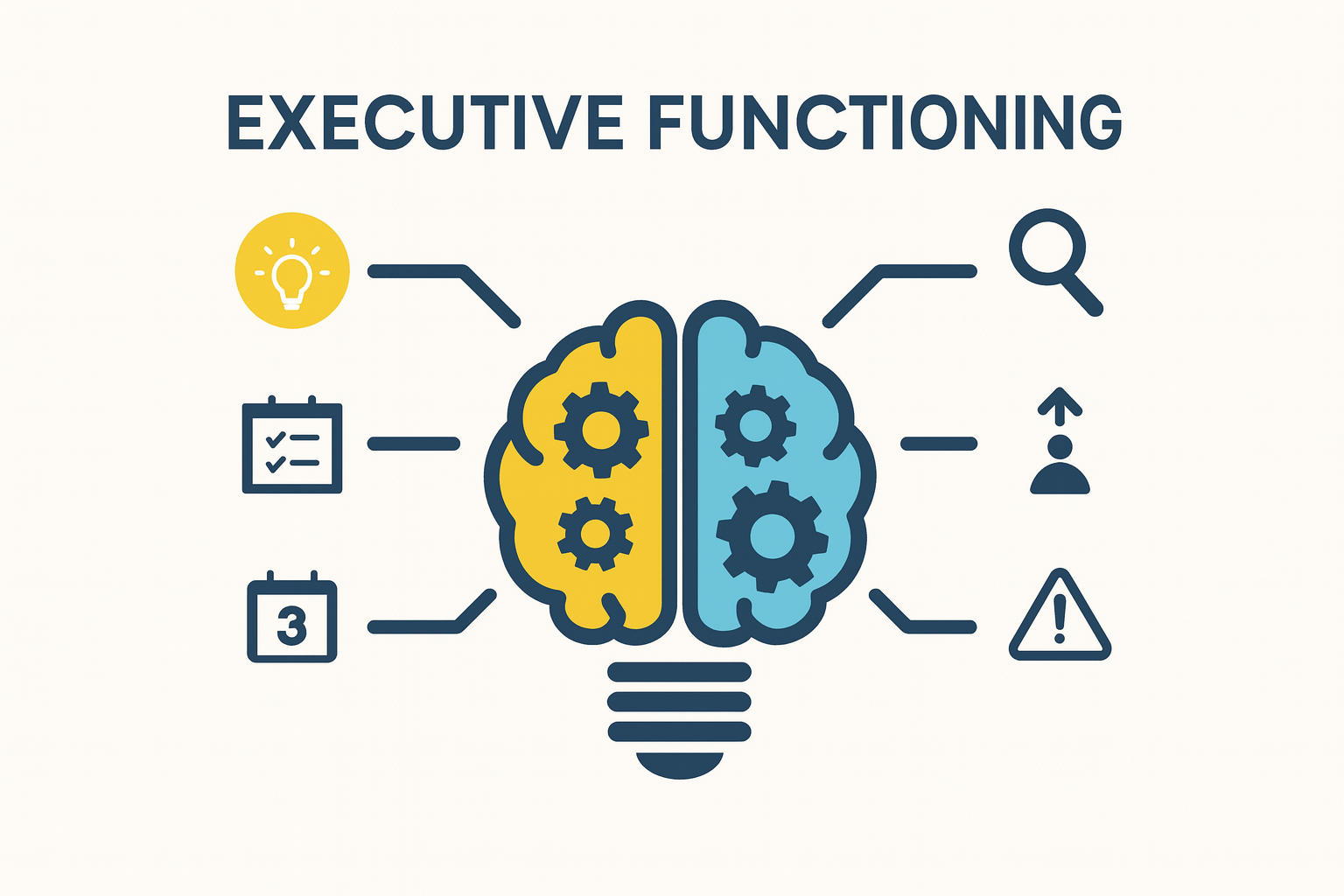
Executive functioning is the brain’s management system. It’s the internal toolkit that helps us plan, organize, focus, regulate emotions, and follow through on goals.
Think of it as the “air traffic control center” for the mind, coordinating thoughts, emotions, and actions so students can move from intention to completion.
Core skills include:
Planning & Prioritizing – Knowing what needs to be done and in what order
Organization – Keeping track of materials, deadlines, and responsibilities
Task Initiation & Completion – Starting assignments without procrastination and finishing them on time
Focus & Attention – Staying engaged, even when distractions call
Time Management – Estimating how long tasks will take and balancing schedules effectively
Self-Regulation – Managing frustration, stress, and emotions with resilience
Working Memory – Remembering and applying information while completing tasks
🌱 Together, these skills form the foundation for independence, confidence, and success, not just in school, but in every stage of life.
Why Do Bright Kids Still Struggle?
When executive functioning skills lag behind intelligence, even exceptional students can feel “stuck.”
Parents often say things like:
“She understands the material, but she never turns in the work.”
“He spends hours on homework but has nothing to show for it.”
“We know he’s capable. He just can’t seem to get started.”
I once worked with a student, let’s call him Alex, who could explain science concepts far beyond his grade level but regularly forgot to submit assignments.
His teachers saw carelessness. His parents saw laziness.
The truth? His executive functioning simply hadn’t caught up with his intellect.
“The issue wasn’t intelligence. It was a gap in executive functioning skills.”
Once we built simple routines for planning, organization, and follow-through, everything shifted.
His grades rose, but more importantly, his stress dropped and his confidence soared.
Why It Matters Long-Term
The best part: these skills aren’t fixed. They can be taught, practiced, and strengthened, just like muscles.
When students build executive functioning, transformation follows:
🎯 Assignments get completed (and completed well)
🎯 Stress and overwhelm decrease
🎯 Confidence and motivation grow
🎯 Parents can finally step back from constant reminders
“Assignments get done. Confidence grows. Stress goes down. Everyone breathes easier.”
And the impact extends far beyond academics. These same skills carry students through high school, college, careers, and life, wherever focus, follow-through, and resilience matter.
The Bottom Line
If your child is bright but struggling, the problem usually isn’t effort or intelligence. It’s that no one has ever shown them how to manage the process of learning.
“Executive functioning is the bridge that turns potential into real achievement.”
That’s why it matters. 🌱 Strengthening these skills doesn’t just change report cards. It changes futures.
